In this old post about the physics of higher dimensions recalled some words of Michio Kaku dismissing his famous book "Hyperspace": "Some people seek meaning in life through personal gain, to through relationships personal or through their own experiences. However, I think that being blessed with the intellect to divine the ultimate secrets of nature gives meaning enough to life. "
Since then it has rained a lot. Stephen Hawking has made some recent statements on science and God, indicating that it is not necessary to explain the origin of the Universe. I have been very surprised because since man discovered in ancient Mesopotamia, that nature is governed by a series of laws more or less complex the God's role is no longer crucial, in some ways. I mean in a way because how we show it was not He who has created these laws? Are laws "per se"? Does the fact that we get to know a perfect God does not need to explain the origin of all, even the origin of these laws? I think the main issue remains the same as for the Mesopotamians . On the physical and the metaphysical way to republish an old post. In the post Hawking himself comes to identify natural law "thinking of God." A greeting.
The previous post ended with a philosophical reflections of eminent physicist Michio Kaku on the meaning of life. While some do not like too, physicists are also people and often think, more than it seems, in important topics. That approach was the person that I decided to finish well.
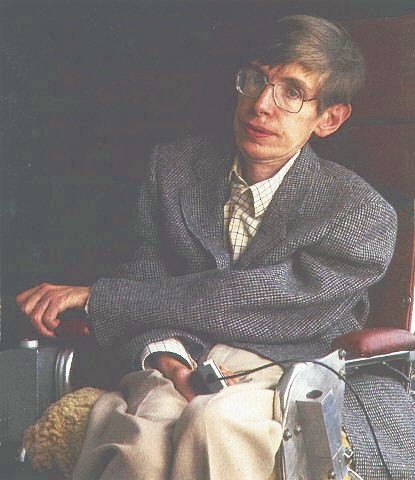
Moreover, in the book of Michio Kaku , shortly before those thoughts will quote some words of Stephen Hawking (when he thought that the grand unification of fundamental interactions was next to arrive, at the end of century): "If we discover a complete theory, over time it might be understandable in broad principles for everyone, not just a few scientists. Then all of us, philosophers, scientists and simple normal people should be able to take part in the discussion the question of why we and the universe exist. If we find the response, would be the ultimate triumph of human reason-for then we would know the mind of God.
Well known is also the famous quote attributed to Einstein on quantum mechanics: "God does not play dice." Another phrase you related to its assessment of the keys that lead to understanding of physical laws said, "God is subtle, not malicious" (is awesome). Finally, in another of his thoughts saying: "I believe in Spinoza's God manifested in the orderly harmony of what exists, not in a God who cares about the fate and human actions. "
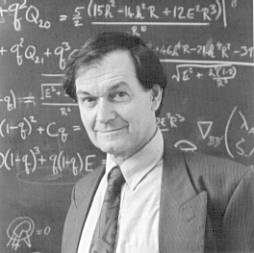
Roger Penrose, one of the physical and mathematical scholars and creative touches the metaphysical world to comprehensively address the philosophical problem of the connection "mind-body." In his famous book "The Emperor's New Mind", goes the theory of relativity, quantum mechanics and cosmology to pursue this important issue. Emerges as a philosopher of the first rank, who is not afraid to address problems that contemporary philosophers shipped calling them meaningless.
The eminent physicist David Bohm had a close relationship with the philosopher Krishnamurti that decisively influenced the formulation of physical theory on the order folding-unfolding and the holographic paradigm. His interpretation "apostate" of quantum mechanics.
In one recent post commented also on this aspect of Dirac: For Dirac, God must be a great mathematician and mathematics that we know we get to know a piece of your creation. Interestingly, Dirac was a big atheist. In this regard, Pauli wrote jokingly in his memoirs: "If I understand Dirac correctly, he says there is no God and Dirac is his prophet."
Paul Davies, professor of applied mathematics at King `s College London and professor of theoretical physics at the University of Newcastle, has an entire book devoted to" God and the New Physics. "
Finally, I believe that physicists have come to understand deeply the harmony and beauty contained natural laws can not stop thinking about a certain transcendence, believe or not believe in God. Feel the greatness of the mysteries that go beyond trying to fathom the purely physical. Metaphysics
, title given by the peripatetic philosopher Andronicus of Rhodes to the set of 14 books of the philosopher Aristotle Greek, when they were collected and edited by him (c. 70 BC), were "after (the) physical" (in Greek meta (ta) physica). Its content deals with what Aristotle himself defined as first philosophy: the study of being (what more general and common shared by all entities whose features are universal.) It is one of the major works of ancient Greek philosophy and is one of the most influential of all the history of Western philosophy. Its title gives its name to one of the main branches of philosophy, metaphysics.
On the controversy which has sparked've read Hawking an interesting phrase, precisely, a theologian: "Science is atheistic and would be a miracle who could prove the existence or nonexistence of God ."
Very good

